Prefab labor camps suitable for remote sites
For companies managing projects in remote areas, providing safe and efficient accommodation for workers is a persistent challenge. The question often arises: Are prefab labor camps suitable for remote sites? The answer is increasingly “yes,” as these modular, pre-manufactured structures offer flexibility, speed, and practicality that traditional housing solutions cannot match. By delivering ready-to-assemble units, prefab labor camps address the logistical and operational challenges of remote project locations, ensuring that workers have comfortable and secure living conditions without unnecessary delays.
One of the primary advantages of using prefab labor camps in remote areas is their ease of transportation and installation. Unlike conventional construction, which requires extensive on-site labor, materials, and time, prefabricated units are manufactured offsite and delivered ready for assembly. This modular approach allows companies to bypass the difficulties associated with remote construction, such as limited access to materials, harsh terrain, or unpredictable weather conditions. Once the site is prepared, the units can be quickly installed, offering a fully functional accommodation solution in a fraction of the time needed for traditional housing.
The adaptability of prefab labor camps makes them particularly suitable for remote locations. These camps are designed to meet various environmental and logistical challenges, whether it is extreme cold, high heat, or difficult terrain. Many prefab units are insulated, weather-resistant, and equipped with self-contained utilities, including water supply, electricity, and sanitation facilities. This makes them ideal for sites where infrastructure is limited or nonexistent. By providing ready-to-use facilities, prefab labor camps reduce the dependency on local construction resources, allowing projects to continue smoothly even in isolated regions.
Speed of deployment is another critical factor in determining whether prefab labor camps are appropriate for remote projects. In areas far from urban centers, traditional construction can be slow and unpredictable due to transportation delays, supply chain issues, and labor shortages. Prefabricated solutions minimize these risks because the majority of the construction work occurs offsite in controlled factory environments. Once delivered, the units can be quickly assembled, often within a few days to weeks depending on the scale of the project. This rapid deployment ensures that workers have immediate access to safe housing, reducing the time needed for temporary shelters or improvised accommodations.
Logistics are simplified with prefab labor camps, which is especially important for remote sites. Transporting large quantities of construction materials and equipment to isolated locations can be costly and time-consuming. Prefabricated units, being modular and standardized, are easier to ship in bulk, using trucks, trains, or even helicopters for extremely hard-to-reach areas. Once on site, the assembly requires minimal manpower, which is beneficial when skilled labor is scarce. This efficiency not only reduces costs but also ensures that project timelines remain on track, a crucial consideration for industries like mining, oil and gas, or large-scale infrastructure development.
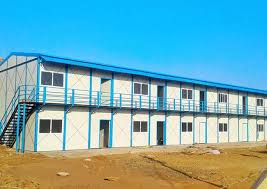
Are prefab labor camps suitable for remote sites?
Another advantage that makes prefab labor camps suitable for remote sites is their scalability. Modular designs allow camps to expand as the workforce grows, without the need for major construction projects. Additional units can be added quickly, and temporary structures can be relocated or repurposed as needed. This flexibility is particularly valuable in remote locations where workforce demands fluctuate depending on the project phase. By allowing incremental growth, prefab camps provide both practicality and cost-efficiency, ensuring that resources are not wasted on permanent structures that may no longer be needed once a project concludes.
Safety and comfort are also major considerations for remote sites, and prefab labor camps are designed to meet these requirements. Well-planned layouts provide sufficient living space, sanitation facilities, and recreation areas, ensuring workers remain healthy and productive. Proper insulation, ventilation, and electrical systems make these units suitable for harsh climates, reducing the risk of illness or accidents. By prioritizing worker welfare, prefab camps not only enhance productivity but also help companies comply with labor regulations and safety standards, which is especially important in regions with limited oversight or challenging environmental conditions.
Environmental impact is another factor favoring prefab labor camps for remote projects. Traditional construction often disrupts the natural landscape due to excavation, material storage, and on-site assembly. Prefabricated units require minimal groundwork, preserving the surrounding environment while still providing fully functional accommodations. Their mobility also allows camps to be removed and relocated once a project ends, leaving the site largely undisturbed. This sustainability aspect is increasingly important for industries that operate in ecologically sensitive or remote areas.
In conclusion, prefab labor camps are highly suitable for remote sites due to their quick installation, logistical efficiency, adaptability, and ability to provide safe, comfortable housing. The modular design allows companies to deploy, expand, and relocate camps with minimal disruption, while maintaining high standards of worker welfare and environmental responsibility. As industries continue to explore isolated locations for mining, energy, and infrastructure projects, the demand for prefab labor camps is expected to rise, offering a practical solution that balances speed, efficiency, and quality. For remote projects, these modular accommodations are not just convenient—they are often the most reliable and cost-effective option available.